
Environment

Our commitments towards environment : ​

🌍 Mitigating the effects of climate change, in line with the Paris Agreement, particularly through energy efficiency, low‑carbon steelmaking solutions, and innovative technologies.

Adapting the Group’s processes and business model to address climate and transition risks, especially through the development of new energies. ​

💧 Controlling and reducing the water footprint, including withdrawals and discharges.

♻️ Optimizing resource use and promoting a circular economy. ​

🛡️Preventing and controlling pollution, particularly in air, water, and soil. ​

🌱 Preserving biodiversity. ​

🤝 Engaging with stakeholders across the value chain on material environmental issues.

Concrete results

1.45
tons of CO₂ emitted per ton of tube produced*
98%
of low carbon electricity
68%
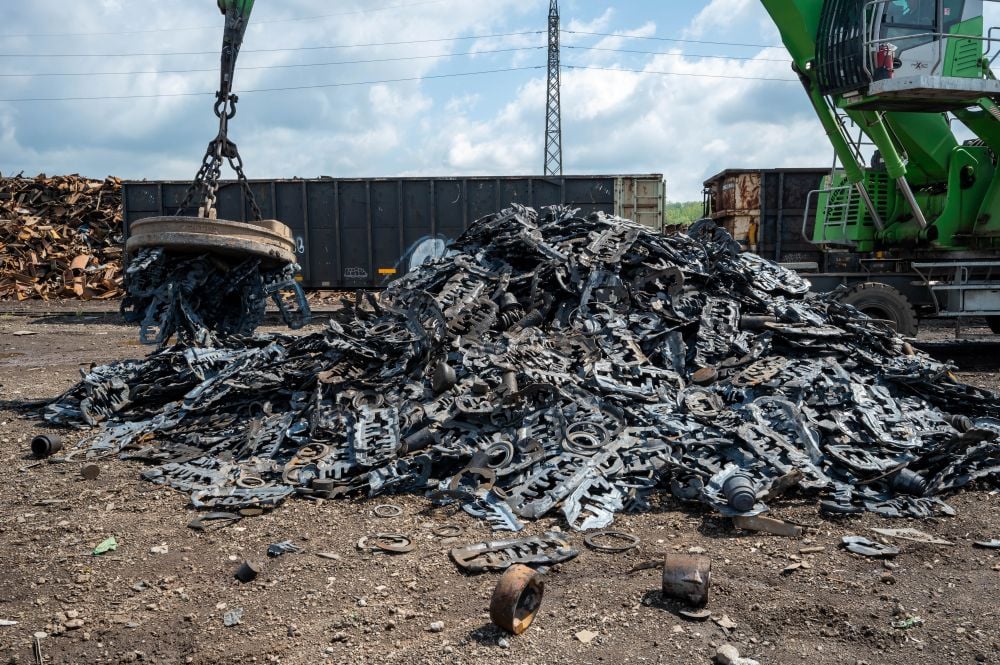
of steel used from recycled scrap
7%
of our water requirements supplied by rainwater***
98.5%
of waste recovery**
100%
of sites certified ​ ISO 14001
164K
hectares of forest in Brazil
40%
preserved in ​its natural state, with corridors​ of circulation for wild animals

*Verified through an Environmental Product Declaration, using PCR 2023:01 “Fabricated Metal Products, Except Construction Products”
** Without exceptionals
***Does not include mine, pellet plant and forest

For more than 20 years now, Vallourec has been running an active program on reducing its environmental footprint and on combating climate change in particular. ​

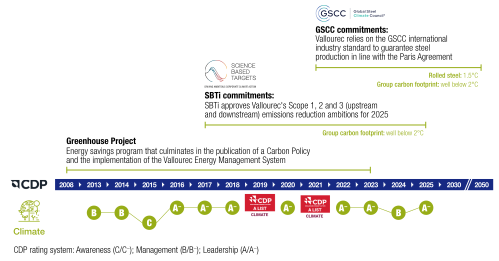
2025 was an important turning point, with the Group announcing that it had met its commitments to reduce greenhouse gas emissions made to SBTi for the period 2017-2025 (ahead of schedule since 2022), and setting an ambitious new target to have rolled steel production aligned with the Paris Agreement relative to the
international and sectoral GSCC (Global Steel Climate Council) standard.​

Our transition plan aligned with Paris Agreement and validated by the GSCC

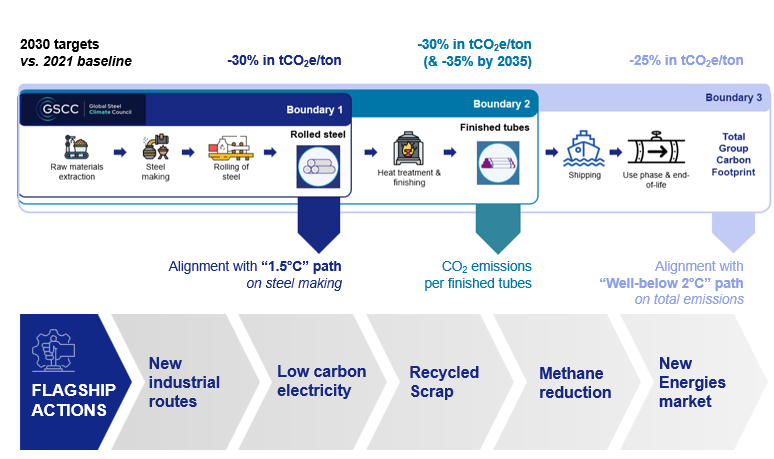
2021-2030: a decarbonization pathway aligned with the Global Steel Climate Council (GSCC) Standard with 3 climate targets:

1. reduce the carbon footprint of hot-rolled steel by 30% by 2030 compared with 2021 (or reach 1.2 tCO2e/metric ton of rolled steel in 2030).​

2. reduce the carbon footprint of finished tubes by:
• 30% by 2030 compared with 2021 (or reach 1.31 tCO2e/metric ton of finished tubes in 2030).
• 35% by 2035 compared with 2021 (or reach 1.22 tCO2e/metric ton of finished tubes in 2035).​

3. reduce the Group’s total carbon footprint by 25% by 2030 compared with 2021 (on total Scopes 1, 2 and 3).

Enhanced industrial processes & footprint


Our core value is to manage the full internal & external supply chain to produce a low-carbon steel.

Assessment of the environmental impact of our solutions

 The life cycle analysis of our products, carried out with the EPD (Environment Product Declaration) standard, attests to a carbon footprint of 1.45 tonnes of CO₂e emitted per tonne of tube produced, validated by an independent certifier.

This result places our premium tubular solutions as those with the lowest carbon footprint on the market.

A rigorous methodology derived from the EPD standard, with calculations based on PCR 2023:01 “Fabricated Metal Products, Except Construction Products” and an audit performed by independent third parties.

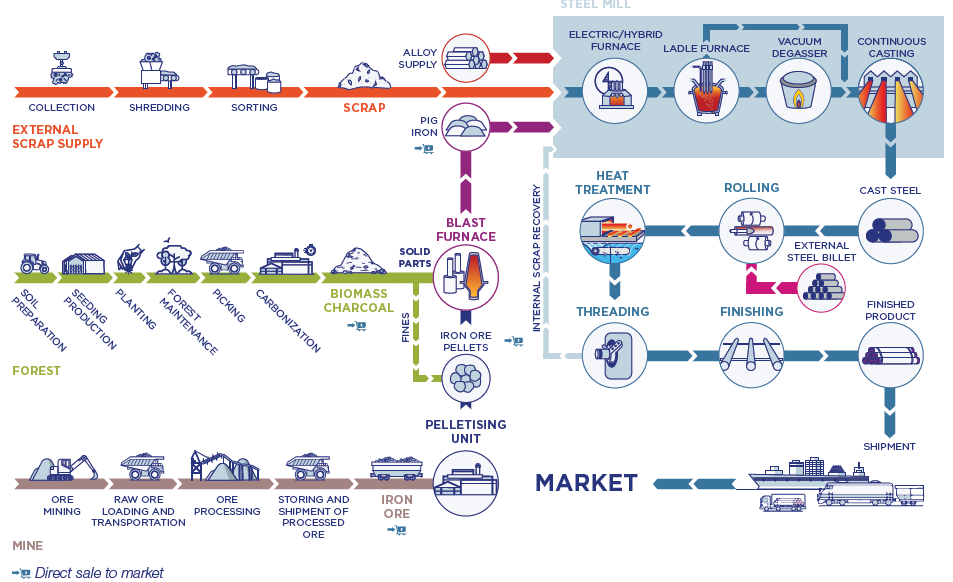
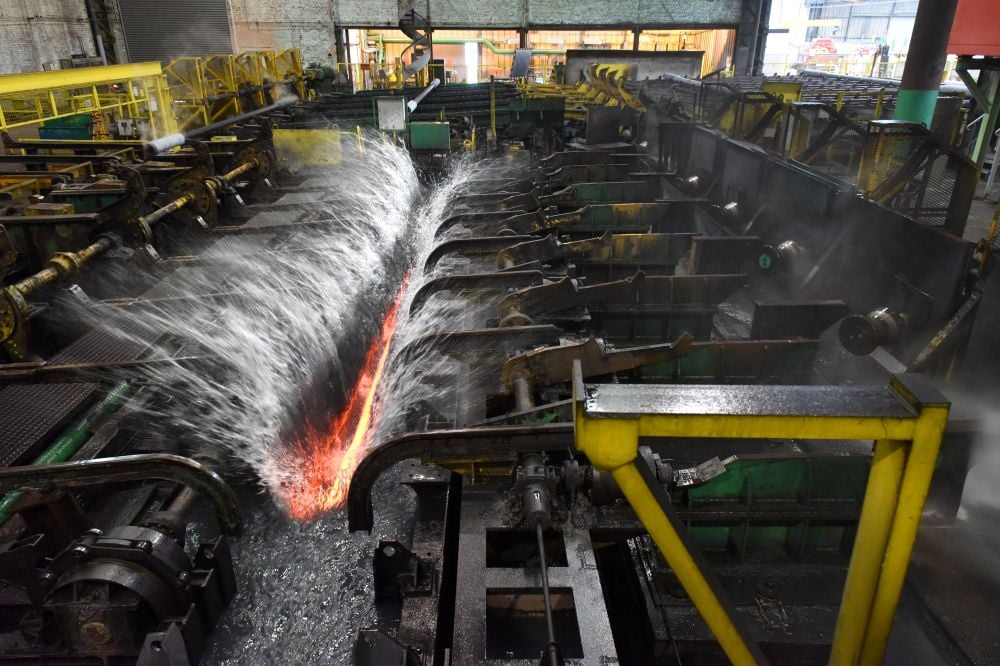
Vallourec global tube manufacturing process

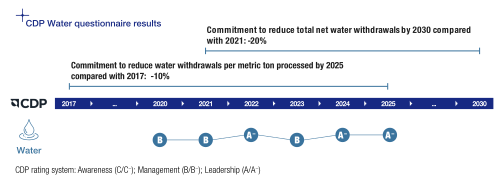
Limit the Group’s water withdrawals

The aim is to reduce water withdrawals in cu.m. (excluding rainwater) by 20% by 2030 compared to the 2021 base year, for all steel and tube production sites and for pelletizing and forestry operations.

Water management is not confined to measuring withdrawals or monitoring the quantity and quality of discharges: a specific action plan for reducing withdrawals is piloted by the sites’ Environment Managers and its operational implementation is monitored quarterly during Group Environment Committee meetings attended by a member of the Executive Committee and the Group Environment division.


Over the past few years, Vallourec has focused on setting up systems for collecting rainwater and increasing reuse rates.


Since 2019 Vallourec Group has committed to responding to the “Water questionnaire” of the Carbon Disclosure Project (CDP) each year, to obtain an independent third-party assessment of the efficacy of its approach and the results of its action plans. Vallourec obtained an A- rating in 2025, ranking among the leading companies in water management. This rating is better than that of the “Metal smelting, refining and forming sector”, which is rated B, and it is also better than the overall average, which is C.

Recover Waste

Because of the nature of its industrial activities, the Group generates significant amounts of various types of waste. ​The Group has set itself the target of maintaining a waste recovery rate of 98%.​


This ambitious target was set following an assessment of the possibilities for recycling all waste generated by the Group’s sites, both internally and by third parties.


Waste management is a major economic and environmental concern for the Group, which believes that most of this waste should now be treated as value-added by-products that generate operating revenue. This is the objective of the “By-products” program.

Based on the 3Rs principle, namely “Reduce, Reuse, Recycle”, the main levers of progress under the “By-products” project are as follows:​

Reduce: various actions are carried out at the sites to reduce waste volumes, and above all the proportion of hazardous waste connected with the decrease in chemical risk.​

Reuse: some waste may be re-introduced or reused in the Group’s processes or externally, either as a result of a specific treatment or after undergoing cleaning or filtration.​

Recycle: recycling is the most important method of recovering value from Vallourec’s various types of waste. The recovery of materials makes up the vast majority of our recycling. However, for some types of waste, recovering energy remains the best solution available.

In 2025, the rate of recovered waste was 98.8%
(98.5% excluding exceptional mine and yard waste).

Our success stories

USA

Steel plant & Rolling mill - Youngstown – Ohio USA
100% of the electricity purchased is of nuclear origin with a low carbon footprint, notably at the steel plant
Since 2020, rainwater recovery at the rolling mill, extended to other uses in 2024.

98% of waste generated is recovered.

Water recirculation rate reaches 99% at the main production sites.